Reduced graphene oxide: an introduction - Page 2
Researchers develop magnetic graphene composite aerogel for efficient electromagnetic wave absorption and anti-corrosion
Electromagnetic wave absorption materials inevitably encounter corrosive conditions during service, making corrosion-resistant design essential for their practical deployment.
Researchers from China's Northwestern Polytechnical University have developed a magnetic graphene composite aerogel (reduced graphene oxide (rGO)/ porous hollow Ni/C microspheres (PHNiC)). The new aerogel reportedly demonstrates excellent impedance matching and electromagnetic attenuation, achieving a minimum reflection loss of −51.3 dB at a thickness of 2.5 mm and a broad effective absorption bandwidth of 6.64 GHz.
Researchers create rGO/MOS2 nanoflower cathodes for aluminum-ion batteries
Researchers from China's Jiangnan University and Dalian University of Technology have designed MoS2/rGO nanoflowers as cathodes for aluminum-ion batteries (AIBs).
Aluminum-ion batteries (AIBs) show promise thanks to their high aluminum reserves, high theoretical specific capacity, and high safety. However, their actual capacity is far lower than the real capacity due to the limitation of cathode. The team's new strategy utilizes reduced graphene oxide-intercalated MoS2 nanoflowers for AIB cathodes, via a hydrothermal method. This approach promoted the transition of MoS2 crystal phase from 2H to 1 T, and the expansion of interlayer spacing from 0.62 nm to 1.03 nm, overcoming the shortcomings of slow electrochemical reaction kinetics and low capacity caused by the outstanding semiconductor properties of 2H MoS2 and the compact interlayers.
New rGO/layered double hydroxide composites for improved lithium-ion batteries
Researchers from Korea's Kyungpook National University and Dongguk University recently addressed common challenges presented by current lithium-ion batteries, by engineering materials at the nanoscale. Their work focuses on a novel hybrid material designed to maximize the synergistic effects of its components.
Image credit: Chemical Engineering Journal
The composite is a hierarchical heterostructure that combines reduced graphene oxide (rGO) with nickel-iron layered double hydroxides (NiFe-LDH). This unique composite leverages the properties of its components: rGO provides a conductive network for electron transport, and the nickel-iron-oxide components enable fast charge storage through a pseudocapacitive mechanism. The key to this innovative design is the abundance of grain boundaries, which facilitate efficient charge storage.
Researchers 3D print unique graphene frameworks for enhanced EMI shielding
Researchers from China's Nanjing University of Science and Technology and Chinese Academy of Sciences (CAS) have developed lightweight and structurally controllable 3D reduced graphene oxide frameworks decorated with magnetic components (MRGO frameworks) via 3D printing technology to tailor EMI shielding properties.
The team explains that by adjusting the preparation conditions of the MRGO frameworks, such as inter-filament spacing, composition, and pyrolysis temperature, the graphitization degree and transmission paths are influenced, enabling electrical conductivity and magnetic property, and ensuring excellent EMI shielding performance.
Researchers develop method to create stretchable and tough graphene films
Researchers have been working on creating elastic and tough graphene films, but it has proven quite challenging so far. Now, researchers at Shanghai Jiao Tong University have introduced a method to overcome this hurdle: they linked graphene nanolayers via "extendable" bridging structures.
Image credit: Angewandte Chemie
The special properties of graphene nanolayers often drop off when the layers are assembled into foils, because they are only held together by relatively weak interactions—primarily hydrogen bonds. Approaches that attempt to improve the mechanical properties of graphene foils by introducing stronger interactions have only been partially successful, leaving room for improvement in the stretchability and toughness of the materials. The research team, led by Xuzhou Yan at Shanghai Jiao Tong University in China, chose a new approach: they cross-linked graphene nanolayers with mechanically interlocked molecules whose building blocks are not chemically linked, but rather inseparably spatially entangled. The researchers used rotaxanes as their links.
Researchers develop rGO-enhanced structural supercapacitors
Researchers from the University of California San Diego and the University of Southern Mississippi recently designed a graphene-enhanced structural supercapacitor. Structural supercapacitors hold promise to expand the energy capacity of a system by integrating load-bearing and energy-storage functions in a multifunctional structure, resulting in weight savings and safety improvements.
As a proof of concept, the researchers used their structural supercapacitor to build a miniature solar-powered boat. The supercapacitor was molded to form the boat’s hull and then fitted with a small motor and circuit. The circuit was connected to a solar cell. When exposed to sunlight, the solar cell charges the supercapacitor, which in turn powers the boat’s motor. In tests, the boat was able to cruise across the water, demonstrating the efficacy of this innovative energy storage solution.
Researchers design rGO-based nerve gas sensor using human scent receptors
Researchers from Seoul National University and Samsung Electronics have developed a sensitive and selective nerve gas sensor using human scent receptors. It reliably detected a substitute for deadly sarin gas in simulated tests.
Nerve gases are often very potent, requiring highly sensitive sensors to detect them quickly and accurately. One method of boosting sensitivity combines human scent receptors with nanomaterials such as reduced graphene oxide to create a "bioelectronic nose." But since these nerve gases are still highly dangerous even in laboratory settings, many scientists rely on safer, substitute molecules instead. In the case of the sarin or soman nerve agents, dimethyl methylphosphonate (DMMP) is a common replacement. Previously, the receptor protein hOR2T7 has been used to detect DMMP, but it could only do so when the nerve agent substitute was in a liquid form, rather than as a gas. So, the research team wanted to design a "nose" of their own that was both highly sensitive and selective for the gaseous form, using nanodiscs containing the hOR2T7 receptor.
Researchers develop rGO-based approach to address oil-water separation challenges
Researchers from Qatar University (QU), Maimoona Mohamed and Nada Yahya Deyab, along with their supervisor Dr. Shabi Abbas Zaidi, have made progress in addressing the challenge of oil-water separation.
Their research focuses on developing a novel material for efficient oil recovery from oil-water mixtures. By modifying polyurethane (PU) sponges and cotton with reduced graphene oxide (rGO), they have achieved promising results in terms of hydrophobicity, oil-absorption efficacy, reusability, and cost-effectiveness, offering a promising solution to address the issue of water and soil pollution caused by oil spills.
Graphene-Info updates its Graphene Oxide Market Report
Today we published a new edition of our Graphene Oxide Market Report, with all the latest information, including both new research activities. Our market report is a comprehensive guide to graphene oxide (and r-GO) materials and their promising applications in energy storage, composite materials, bio-medical, water treatment and more.
Reading this report, you'll learn all about:
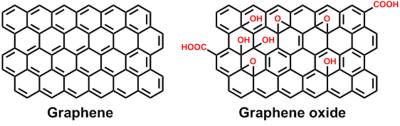
- The difference between graphene oxide and graphene
- Graphene oxide properties
- Possible applications for graphene oxide
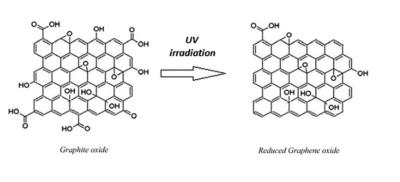
- Reduction of graphene oxide to r-GO
The report package also provides:
- A list of prominent GO research activities
- A list of all graphene oxide developers and their products
- Datasheets for over 20 different GO materials
- Free updates for a year
This Graphene Oxide market report provides a great introduction to graphene oxide materials and applications, and covers everything you need to know about GO materials on the market. This is a great guide for anyone interested in applying graphene oxide in their products.
LayerOne and SINTEF collaborate on graphene-based conductive inks project
LayerOne (formerly Abalonyx) and SINTEF (a Norway-based research institute) have secured funding from The Norwegian Research Council for the development of innovative, scalable and sustainable conductive inks based on reduced graphene oxide (rGO). The rGO-based inks promise improved electrical conductivity and stability surpassing traditional carbon-based inks and offering a less toxic and more cost-effective alternative to metal-based inks.
The research project is a result of LayerOne’s recent breakthrough in developing a new grade of rGO with an electrical conductivity two orders of magnitude greater than standard rGO grades. In the project, LayerOne will supply the advanced rGO materials while SINTEF will leverage and build on its experience from recently concluded projects on printed electronics to develop the new conductive inks.
Pagination
- Previous page
- Page 2
- Next page