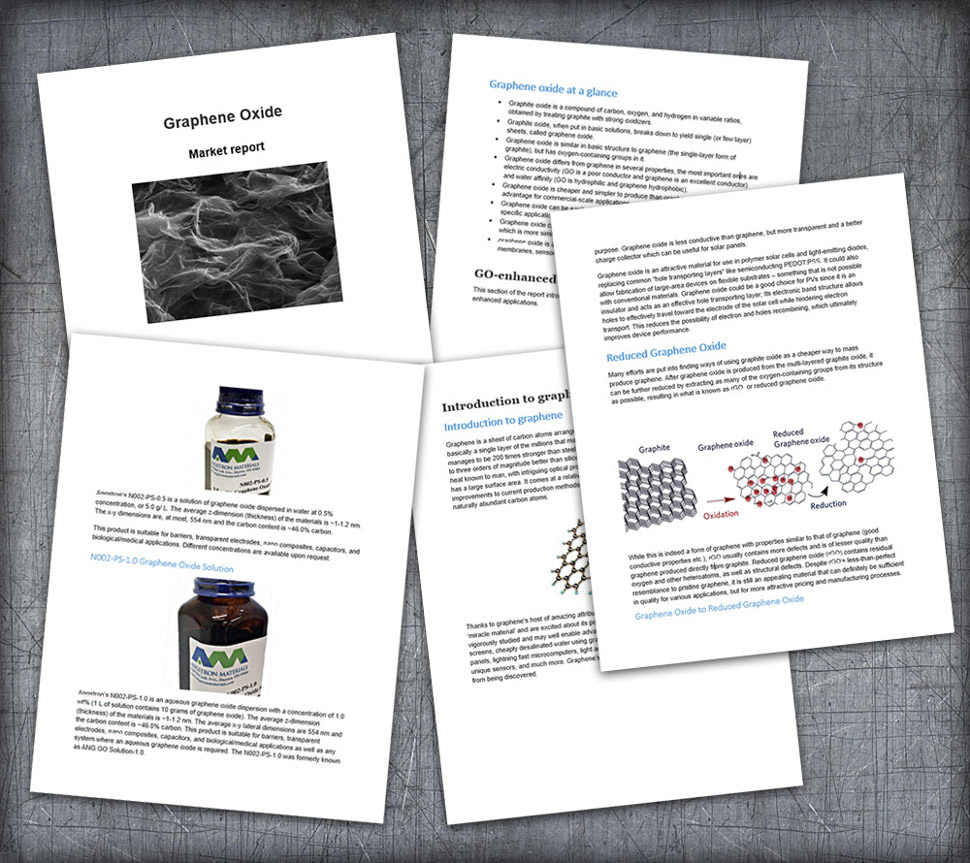
Graphene Oxide NewsA beautiful graphene oxide photo wins science imaging competitionAndrew Koltonow won first place at the annual Northwestern's Science in Society's science imaging competition, with his beautiful "cosmic" microscopic image of graphene oxide:
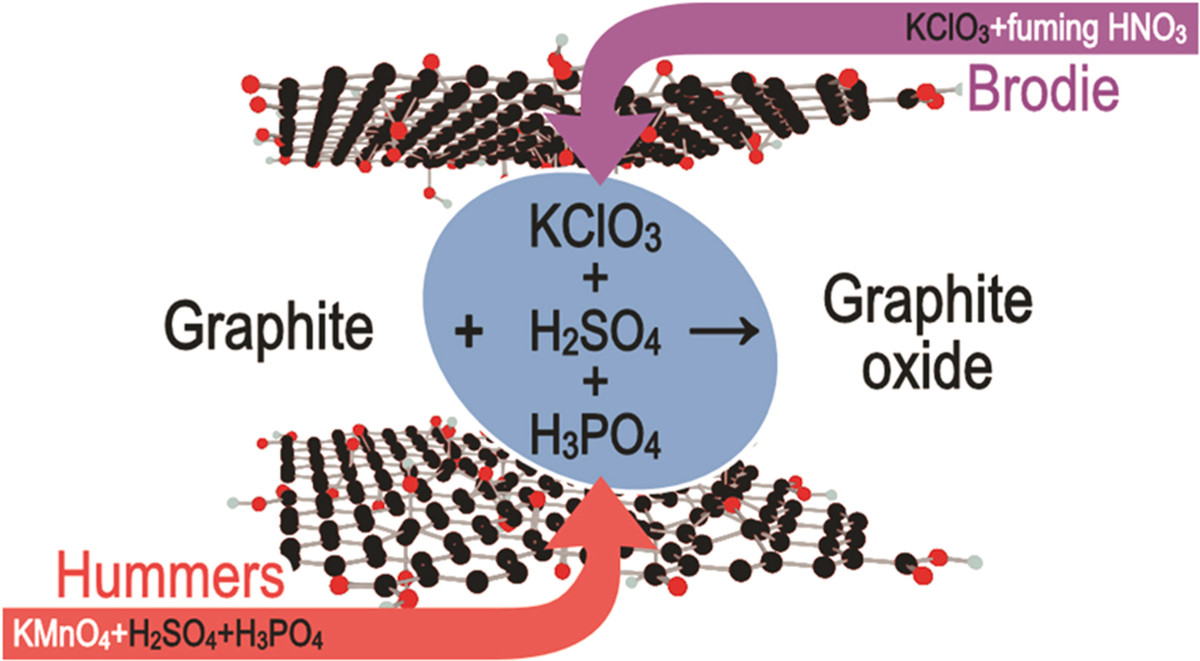
Wanna make graphene-oxide at home? Here's howRobert Murray-Smith posted a new video (with unsynchronized audio) showing how to make graphene-oxide at home. The basic idea is to start with a mix of sulfuric acid and phosphoric acid, add powdered graphite and stir it. Then you add permanganate and stir it for three days. Robert hasn't managed to actually isolate the graphene oxide, but he's working on that: If anyone tries that himself, let us know the results...
Interview with Bluestone Global Tech's CEO, promises first graphene-based touch panels by Q3 2013
Dr. Lai became BGT's CEO in November 2012. Previously he worked with Taiwan's ITRI institute, Veeco, Applied films and other companies. Dr. Lai received his Ph.D. degree from the Department of Ceramics Science and Engineering of Rutgers University in 1992.
The UK government funds a $5 million graphene membrane research at the University of ManchesterThe UK's Engineering and Physical Sciences Research Council (EPSRC) awarded a £3.5 million ($5.3 million) to the University of Manchester, for graphene membranes research, with an aim to bring desalination plants, safer food packaging and enhanced disease detection closer to reality. These highly selective graphene membranes are made from graphene platelets. The aim of the project is to produce working prototypes together with industrial partners. The university researchers already demonstrated that graphene oxide membranes are highly permeable to water, while being completely impermeable to gases and organic liquids when dry. Now they plan to combine graphene with a new type of polymers invented at Manchester (called Polymers of Intrinsic Microporosity, or PIMs) – which hopefully enable membranes that are even better than pure graphene ones.
Graphene-vanadium ribbons enable ultrafast Li-Ion batteriesScientists from Rice University developed new ribbons made from vanadium-oxide and graphene-oxide (using a simple hydrothermal process) that make for superior Li-Ion battery cathodes. Batteries that use these new cathodes exhibit high energy and power densities. The new cathodes use materials that are relatively abundant and cheap. The researchers found out that prototype cathodes used with halfcells can charge and discharge in 20 seconds and retain more than 90% of the capacity after more than 1,000 cycles. Those prototype cathodes were made from 84% VO2 (that hold 204 milliamp hours of energy per gram).
Graphene Aerogel, the world's lightest material ever madeResearchers from China's Zhejiang University developed a new sponge-like solid material (which they call Graphene Aerogel) made from freeze-dried carbon and graphene oxide which they say is the lightest material every made. It's so light it can be placed on the delicate petals of a cherry blossom: Aerogel weighs just 01.6 milligrams per cubic centimeter, just twice the density of hyrdogen. UCLA enhances their laser-scribed graphene supercapacitor technology, ready for commercializationBack in March 2012 we posted about a UCLA research that developed laser-scribed graphene (LSG) based flexible capacitors using simple DVD burners. Now those same researchers have published a new paper describing an new structural design, which makes the capacitors compatible with other integrated circuits and enhances their capacity and speed. They are now looking for industrial partners to commercialize the technology. Their original design stacked graphene layers to create the electrode, which was not compatible with integrated circuits. The new design uses a side-by-side electrode placement which helps to maximize the accessible surface area available for the electrodes while also reducing the path over which ions in the electrolyte would need to diffuse. The new capacitors have a higher charge capacity and rate capability.
|
|