 Graphene-XT (previously GNext) is a startup that develops and produces high quality graphene.
It actively collaborates with customers with the aim of improving product characteristics and designing personalized solutions. Through a multi-functional approach it provides new and better functionalities to conventional products.
Graphene-XT uses graphene for several applications: lubricants, membranes, sensors, composites, coatings, inks, paints.
Graphene-XT has developed, through an eco-friendly approach, an industrial-scale production of high quality graphene. Graphene-XT patented technology produces graphene with a liquid phase exfoliation process that allows producing high-quality graphene consisting of 50% of monolayers and 50% of few layers.
Contact information for Graphene-XT
Via D’Azeglio, 15
40123 Bologna BO
Italy
The Graphene Flagship details its achievements in graphene automotive technology
The Graphene Flagship, Europe's $1 billion graphene research initiative, has summed up its progress in advancing graphene-based innovations for automotive in the last ten years. The project examines, among other topics, how graphene can address key challenges in the automotive sector, such as fuel efficiency, recycling, and environmental impact.
Graphene has the potential to drive significant advancements in the automotive industry — from strengthening structural components to improving electrochemical energy storage (i.e., Batteries) efficiency and safety in electric cars as well as enhancing the performance of the self-driving car. The Graphene Flagship has orchestrated a number of projects researching the benefits of graphene in automotive applications and how vehicles can be improved. The Graphene Flagship reports it is now seeing this research and development come to fruition. Listed below are the automotive-related advancements that were achieved.
The Graphene Flagship's chief, Prof. Jari Kinaret, shares his views on the latest graphene development and the post-Flagship future
The Enlit Europe 2022 energy conference recently took place, and the Graphene Flagship participated, showing some of the latest energy-related graphene projects. We took the chance to discuss graphene with some of the flagship researchers, and we also talked to Prof. Jari Kinaret, the director of the flagship project, to learn of how he summarizes the last 10 years now that the flagship project will soon end.
Q: We understand that the Graphene Flagship is attending Enlit Europe 2022, showing some new graphene R&D projects. We'll be happy to get an overview of what will be displayed at the event.
At Enlit Europe, the Graphene Flagship exhibited innovations from its Spearhead Projects, which are industry-led initiatives working to move materials from research labs towards commercial applications. Among these initiatives are:
- CircuitBreakers, led by ABB and developing first-of-their-kind grease-free, maintenance-free, low-voltage circuit breakers for fault protection in key parts of the electrical grid;
- GRAPES, led by Enel Green Power and working on combining silicon solar cells with perovskite solar cells, paving the way for low-cost, highly efficient photovoltaic energy, surpassing the limits of silicon based cells.
Graphene-XT develops graphene-enhanced lubricating oil additive for engines
Researchers at Graphene-XT have developed a new graphene-based lubricating oil additive for diesel and petrol engines in cars or motorcycles.
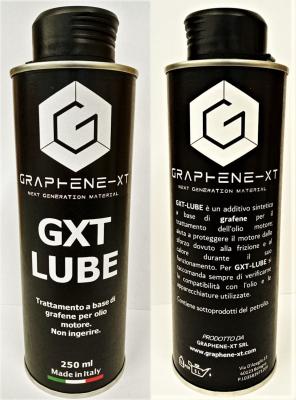
By introducing graphene into a lubricating oil, Graphene-XT found that both its performance and stability improved, resulting in more compression and less wear and tear in the engine parts of both cars and motorcycles.
Graphene Flagship team uses GO to stretch the limits of gas separation
Researchers associated with the Graphene Flagship have reported overcoming the theoretical limiting performance of membranes in gas separation. This collaborative research from CNR, University of Bologna and Graphene-XT has potential applications in hydrogen purification and carbon capture and storage.
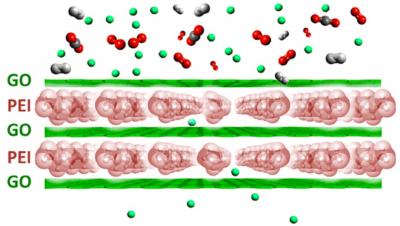
The team explains that polymer-based membranes for gas separation have a trade-off between high gas permeability and high gas selectivity, the so-called Robeson upper bound. By combining individual graphene oxide sheets with polymer spacers, in a sandwich style structure, the researchers have been able to overcome this limit, separating gas quickly and efficiently.

